






How AI Answer Engines Discover and Describe Local Businesses
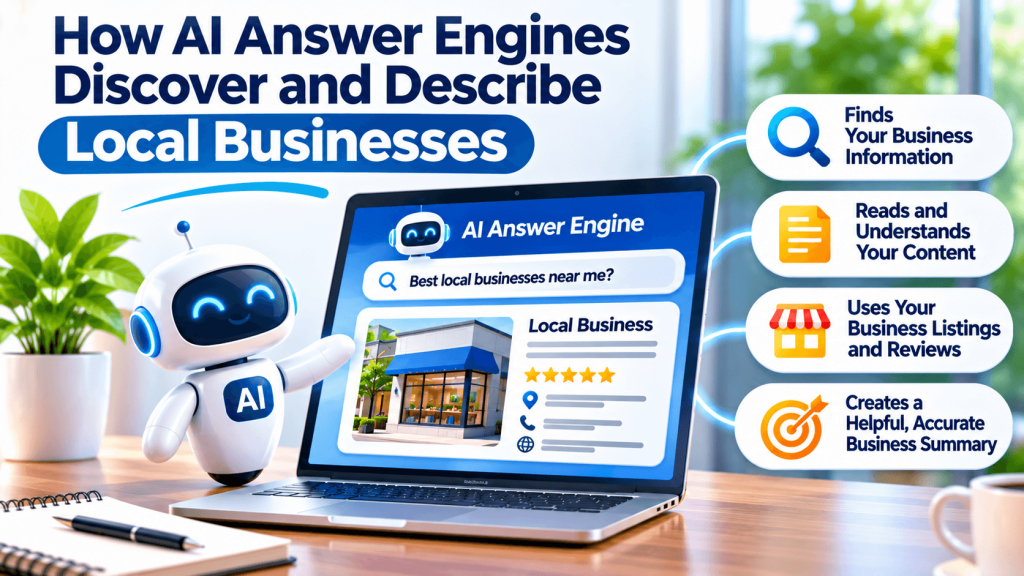
More customers now type full questions such as “who does same-day computer repair near Plano?” into AI assistants and search features that reply in sentences instead of a list of links. A business owner reading one of those answers may notice their company is missing, or described with hours they changed months ago. That raises a fair question: where do these tools get their information, and what can a small business do about it?
Where AI Answers Get Business Details
AI-powered search features generally draw on information already published across the web and in search indexes: business websites, maps and business profiles, reviews, news coverage, and directories. Providers don’t publish a complete list of which sources they weigh for a given answer, so no single listing can be said to control what an assistant says about you.
What you can control is how clear and consistent your information is wherever it appears.
Write So Your Business Is Easy to Summarize
Answer engines work best with plainly stated facts. On your website, say what you do, where you do it, and who you serve in the first lines of key pages rather than hiding it behind slogans. Add a short FAQ that answers real customer questions in a sentence or two. A landscaping company, for instance, might answer “Do you offer weekly mowing in Round Rock?” directly.
Structured data such as LocalBusiness schema markup can also help search systems read your name, address, hours, and services. It’s one signal among many, not a guarantee.
Build Consistent Mentions Across the Web
Mentions of your business on other reputable sites help confirm that the details on your own website are accurate. That includes your Google Business Profile, industry associations, local news, and online business directories with complete profiles. Marketing agencies and consultants, for example, can appear in Select Business Zone’s SEO, SMO and PPC category, which gives potential clients another place to read a clear description of their services.
A common mistake is writing a completely different business description for every platform. Keep the core facts identical and change only the length.
Clarity Beats Tricks
No shortcut reliably places a business inside AI-generated answers. The practical path is the same one that helps human customers: accurate, consistent, plainly written information in the places people and search systems look. Review your website copy, your Google Business Profile, and listings such as Select Business Zone with that in mind, and update anything vague or outdated.
Frequently Asked Questions
Can I pay to appear in AI search answers?
Some platforms are testing ads near AI-generated results, but you can’t buy a place inside the organic answer itself. Your best influence is publishing accurate, specific information on your own website and keeping your profiles and listings consistent, so the facts an assistant finds about your business are correct.
Is answer engine optimization different from regular SEO?
AEO overlaps heavily with SEO. Both reward helpful, well-organized content and accurate business information. AEO puts extra weight on direct answers to specific questions, clear page structure, and consistent facts that are easy to summarize. Think of it as writing so both people and automated systems understand you quickly.
What should I do if an AI tool gets my business wrong?
Check the public sources it might be using: your website, Google Business Profile, review sites, and directory listings. Correct any outdated details you find. Many AI tools also have a feedback option on their answers. Fixing the underlying public information is usually the more lasting step, because it improves every place that reads it.
Is schema markup worth it for a small business?
It can help. LocalBusiness schema gives search systems a structured version of your name, address, phone, and hours. It isn’t required, and it won’t fix wrong information elsewhere, but if your website platform supports it, adding correct markup is a reasonable, low-cost improvement you can make once and maintain occasionally.
 Keep reading